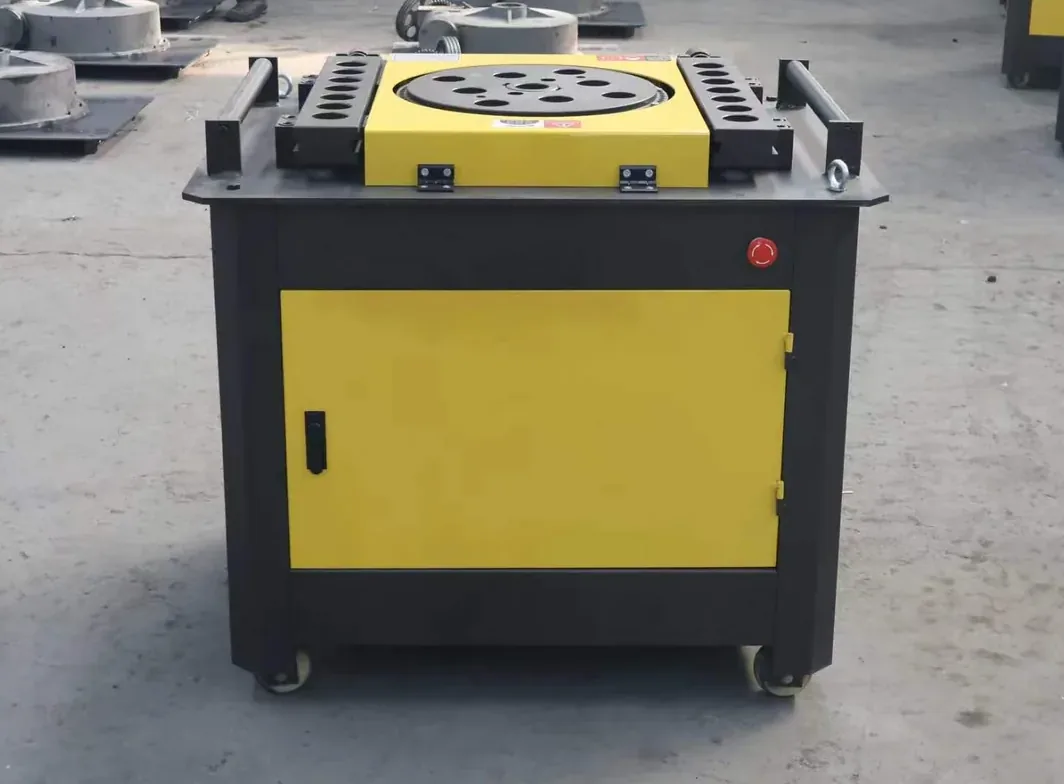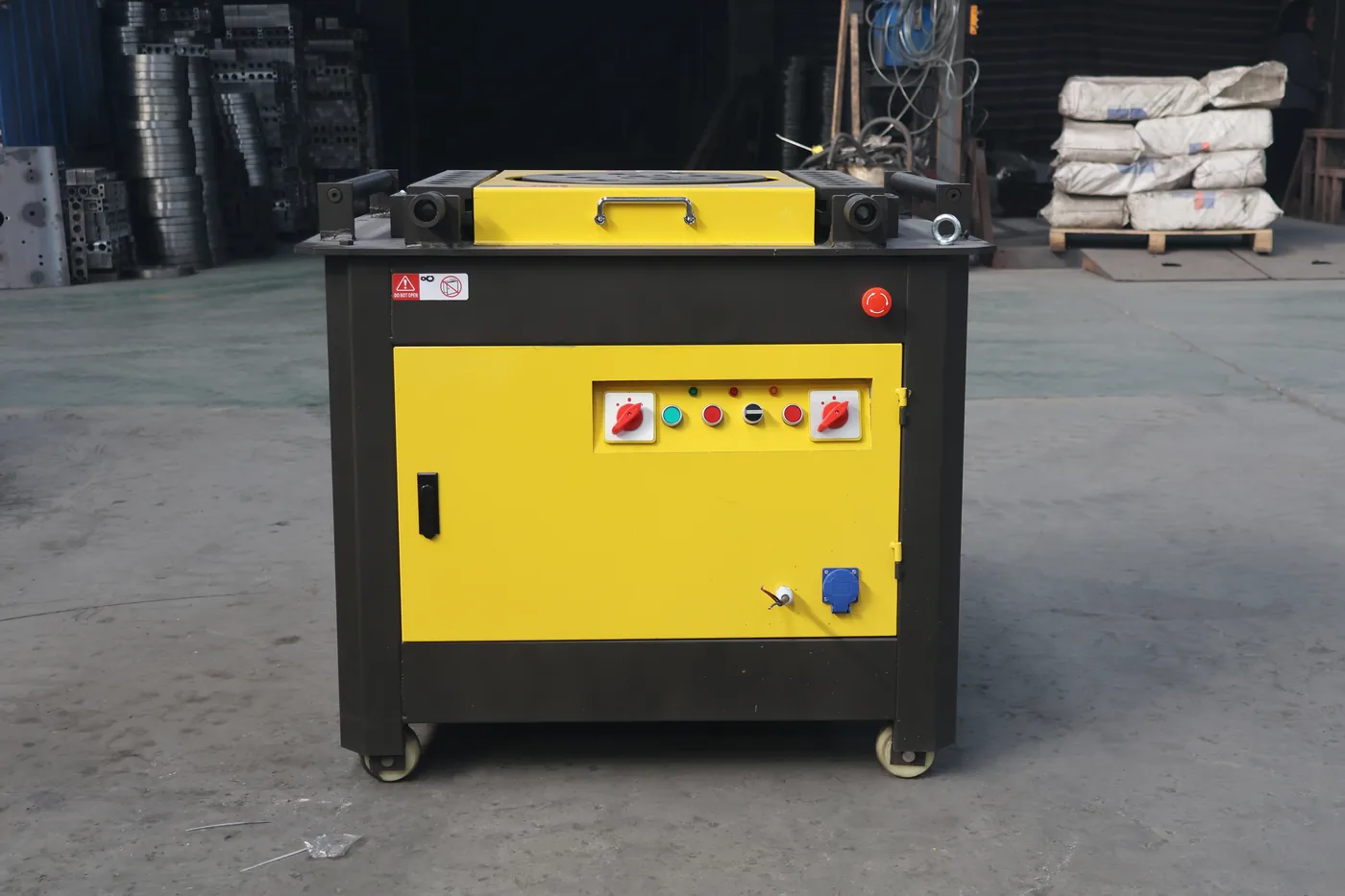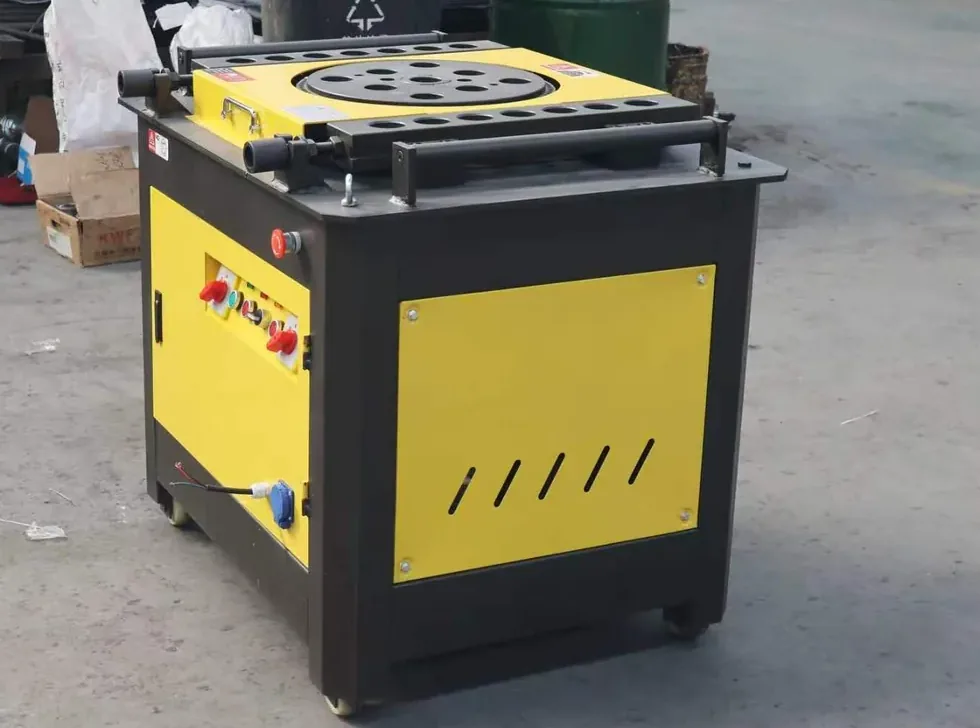
Electric Rebar Bending Machine — 40 mm
Electric rebar benders and cutters for site fabrication yards and precast plants. Benders form stirrups, hooks and bent bars up to 60 mm; cutters shear round bar and deformed rebar up to 60 mm. Each model is specified by its maximum bar capacity.
More questions are answered on the FAQ page.
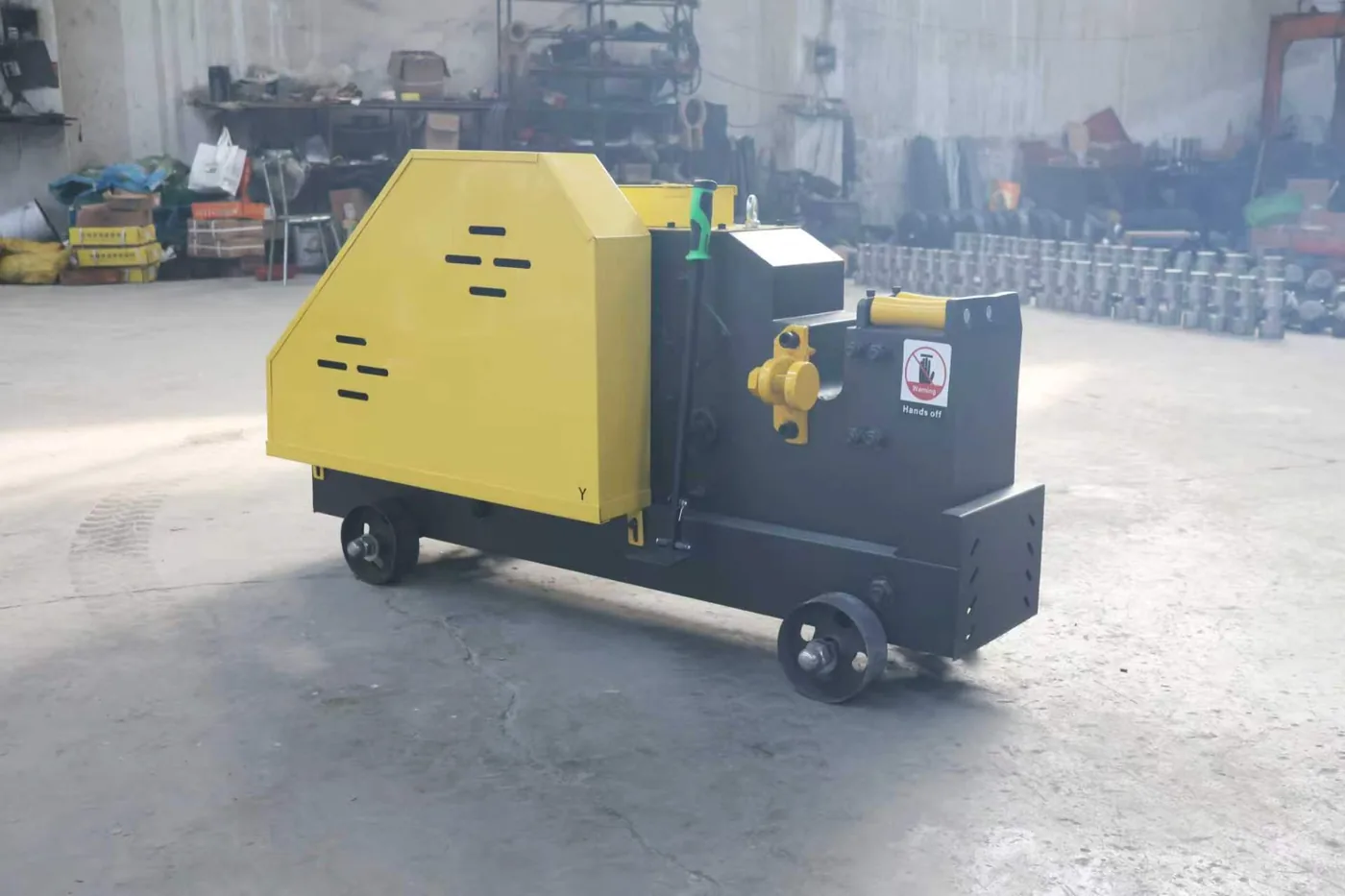
They do opposite jobs and neither replaces the other. A bender forms bar into stirrups, hooks and bends at a controlled radius. A cutter severs bar cleanly to length. Most fabrication yards need both, which is why they are supplied as separate machines with separate capacity ratings.
The number in each model name is its bending or cutting capacity in millimetres, measured on round bar. A 40 mm machine handles bar up to 40 mm; a 60 mm machine handles up to 60 mm. Choose from the largest bar in the job, not the average — a machine run constantly at its limit wears faster than one with headroom.
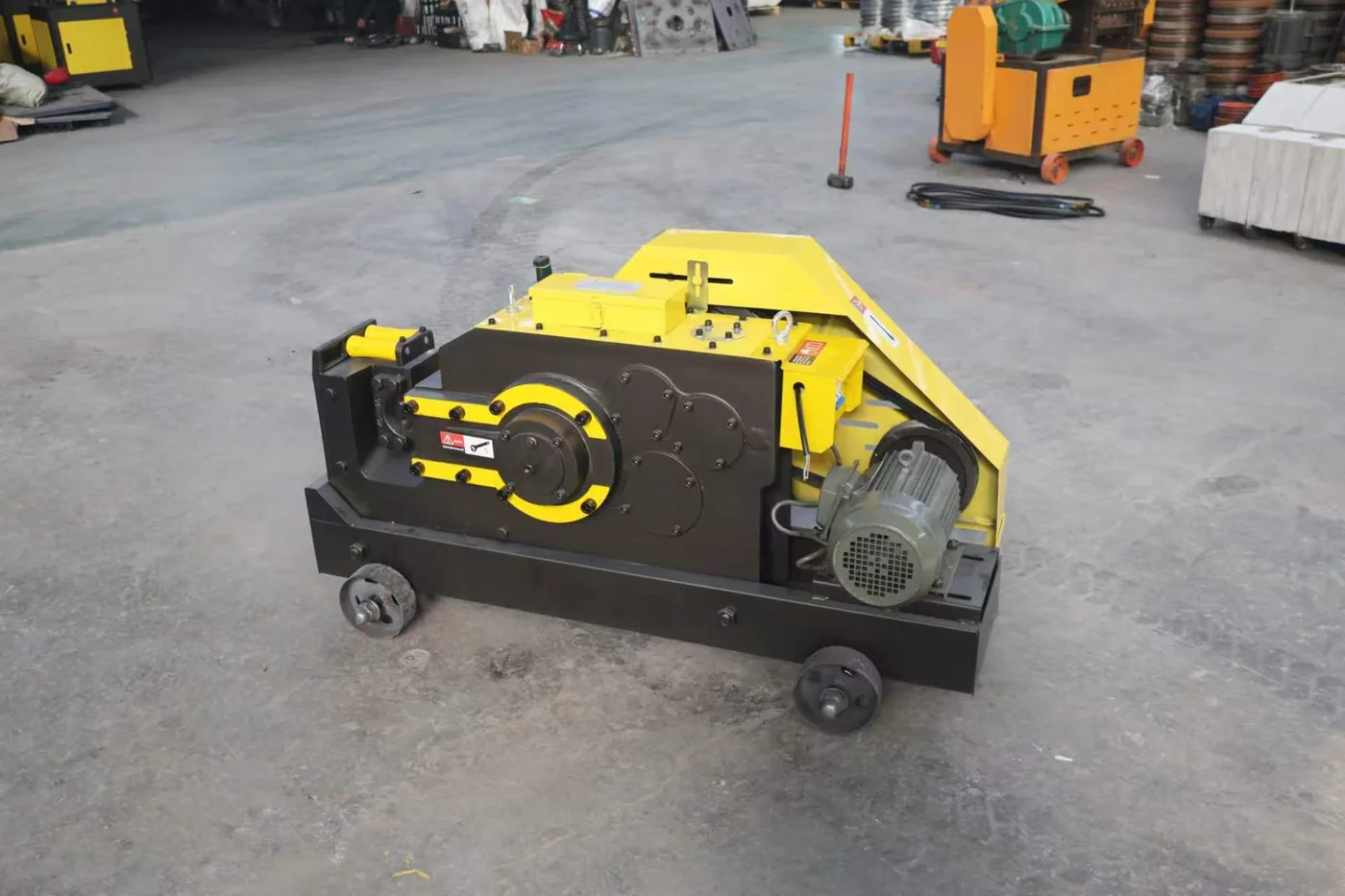
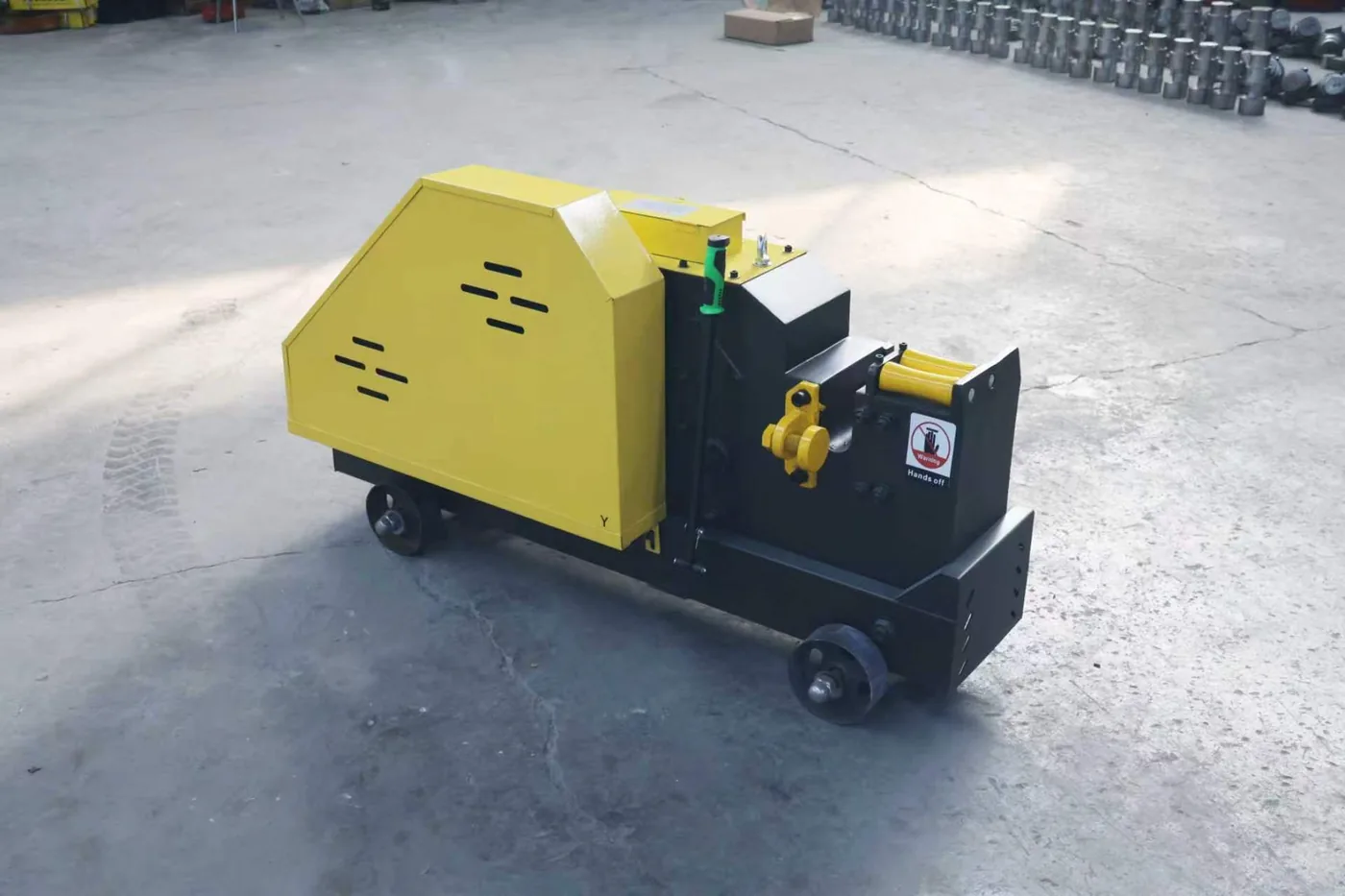
The 50 mm cutter is rated for 36 mm threaded bar and 38 mm round bar, with a machine size of 1420 × 550 × 810 mm and a weight of 408 kg. It ships in a 1450 × 570 × 850 mm wooden case.
The 50 mm bender measures 960 × 810 × 810 mm and weighs 322 kg, and its wooden export case measures 980 × 830 × 830 mm at 350 kg. Allow working space around the machine for the bar to swing when it is bent.
No. Bending and cutting are mechanically different operations and combination machines compromise both. The catalogue lists them as separate units so each can be specified at the capacity the job actually needs.
Tell us the capacity, the power supply you have and the destination port. We will confirm which model in this line fits and quote it with packing dimensions.