Polyurethane Concrete Stamp Mold (Basketweave)
Stamp mats and silicone moulds for imprinting and casting decorative wall finishes in concrete — brick and basketweave stamping, and culture stone cladding.
Showing 2 models in Decorative Wall Moulds.
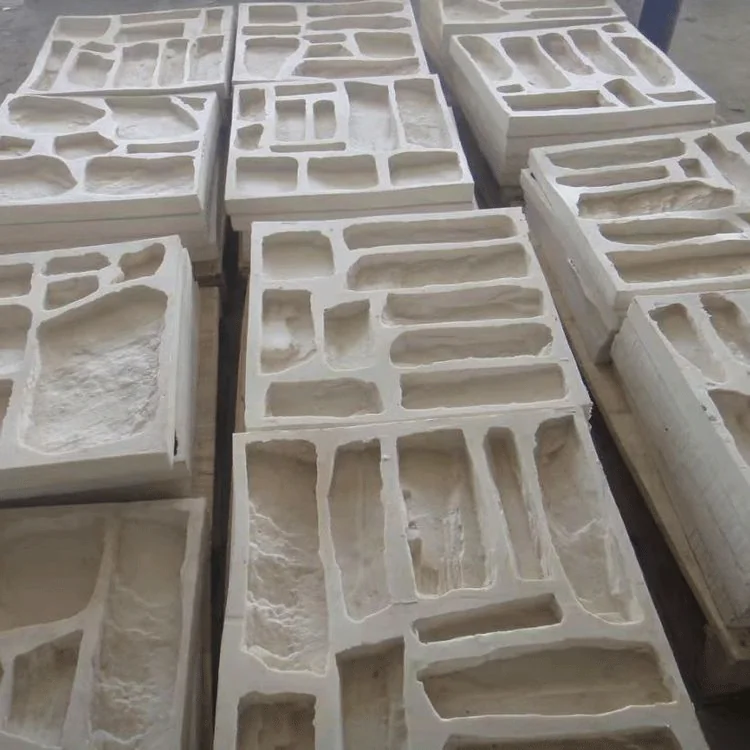
A stamp mat and a culture stone mould finish a wall with a pattern in two different ways, and the two products in this line are one of each. A stamp mat presses a pattern into concrete that has already been placed, so the wall itself is the material and the mat only changes its surface. A culture stone mould casts the cladding unit instead, so the piece that comes out of the mould is what gets fixed to the wall.
That difference decides which one a job needs. Stamping suits a slab, a path or a wall that is being poured anyway, because the pattern is added to work that is already happening. A mould suits a wall that is already standing and needs stone cladding, because the units are produced off the wall in the yard and then installed.
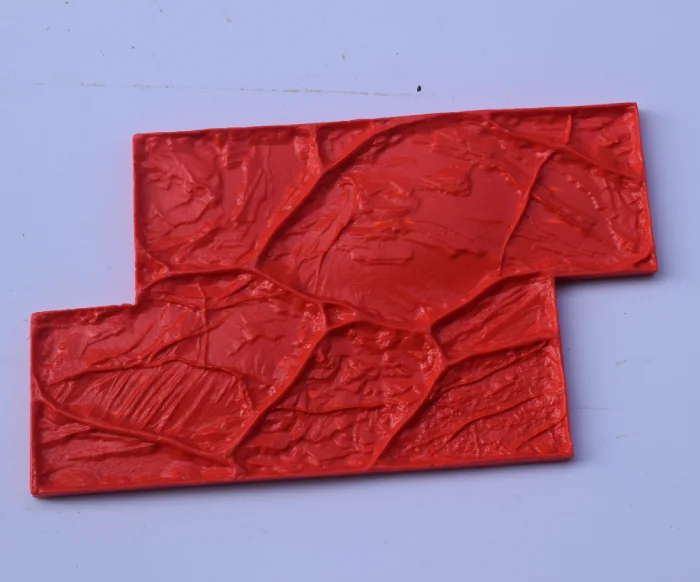
The stamp mat in this line presses a basketweave brick pattern, the alternating horizontal and vertical arrangement, over a working face of 500 × 350 mm. It is polyurethane rather than a rigid material, and that flexibility is the point: the mat has to follow the surface of the slab to press the pattern in evenly across the whole face rather than only where it touches first. Mould life is quoted at three years.
The minimum order is one piece, packed in woven bags, with delivery seven days after payment and a lead time of 25 days for orders of one to five pieces. A single package measures 60 × 50 × 6 cm at 4 kg gross, light enough for one person to place by hand.
The culture stone mould casts artificial culture stone wall cladding in a standard specification of 540 × 540 × 35 mm, with a casting thickness of 20 to 25 mm. It is made from silicone rubber, again for flexibility: a mould that has to release a textured face without tearing it needs to give slightly as it is stripped. Customer sizes are accepted, so the mould is produced to the profile you need rather than only in the standard size.
The cladding it casts is used on interior and exterior walls, on new buildings and on the renovation of old ones, and the colour options are red, blue, yellow, brown and black. It is described as durable, colour fast and corrosion resistant, with weathering and frost resistance, and as light, impermeable and maintenance free.
The minimum order for the mould is 10 pieces, packed at 60 × 60 × 10 cm and 10 kg gross. No lead time is published for this mould, so it is confirmed at enquiry.
More questions are answered on the FAQ page.
They apply a pattern at different stages. A stamp mat presses a pattern into concrete that is already placed, so it decorates a surface that has just been poured. A culture stone mould casts the cladding unit itself, so the pattern is produced off the wall in the yard and the finished piece is then fixed to it. Stamping decorates work that is happening anyway; a mould produces a stone-effect facing for a wall that is already standing.
A basketweave brick pattern over a working face of 500 × 350 mm. The mat is polyurethane rather than rigid, because it has to follow the surface of the slab to press the pattern in evenly across the whole face. Mould life is quoted at three years, and the minimum order is one piece.
The standard specification is 540 × 540 × 35 mm with a casting thickness of 20 to 25 mm, made from silicone rubber so that it releases a textured face without tearing it. Customer sizes are accepted, so the mould is produced to the profile you need rather than only in the standard size. The minimum order is 10 pieces.
Red, blue, yellow, brown and black. It is used on interior and exterior walls, on new buildings and on the renovation of old ones, and is described as durable, colour fast and corrosion resistant, with weathering and frost resistance, and as light, impermeable and maintenance free.
Tell us the capacity, the power supply you have and the destination port. We will confirm which model in this line fits and quote it with packing dimensions.