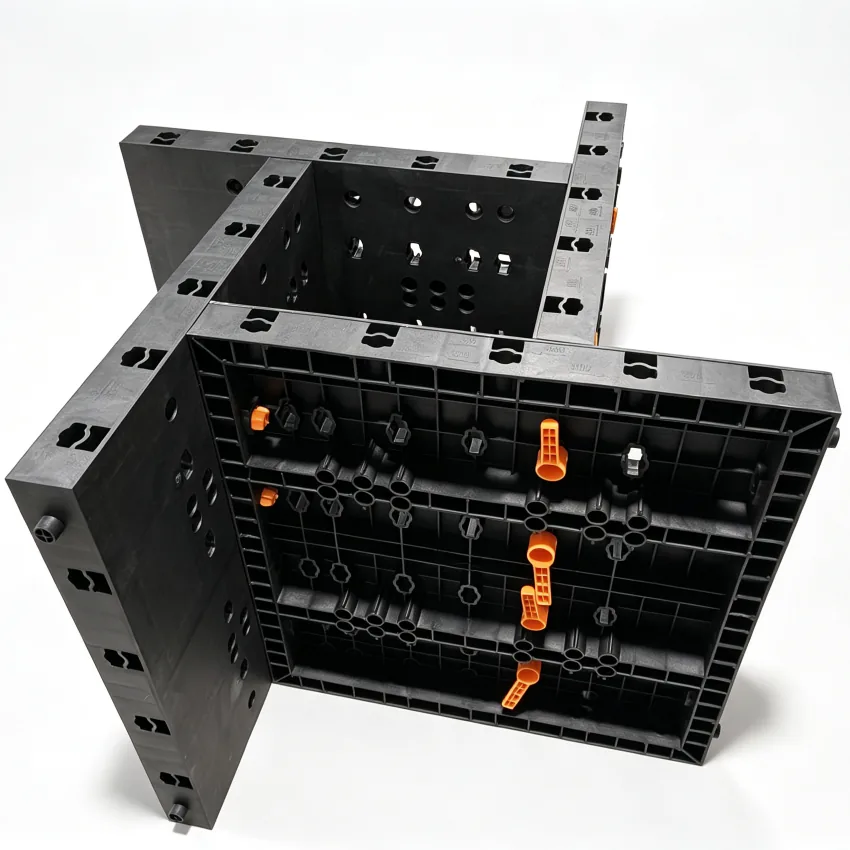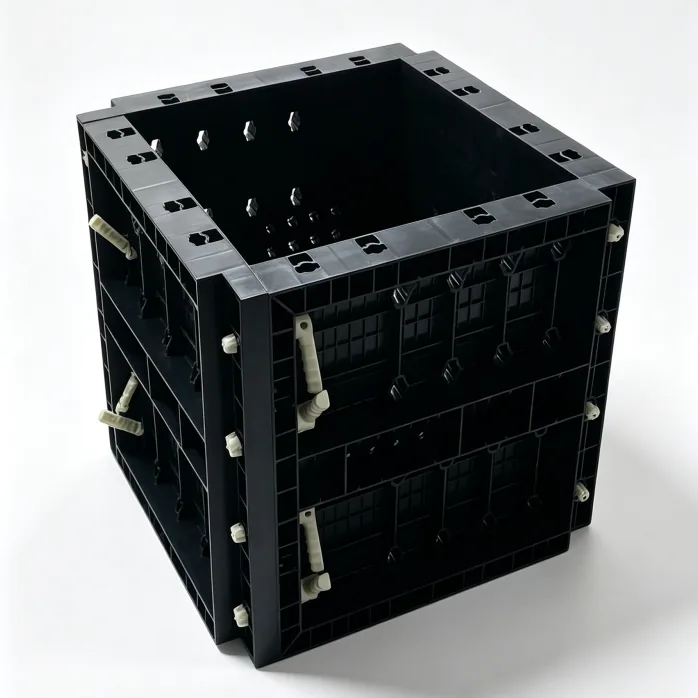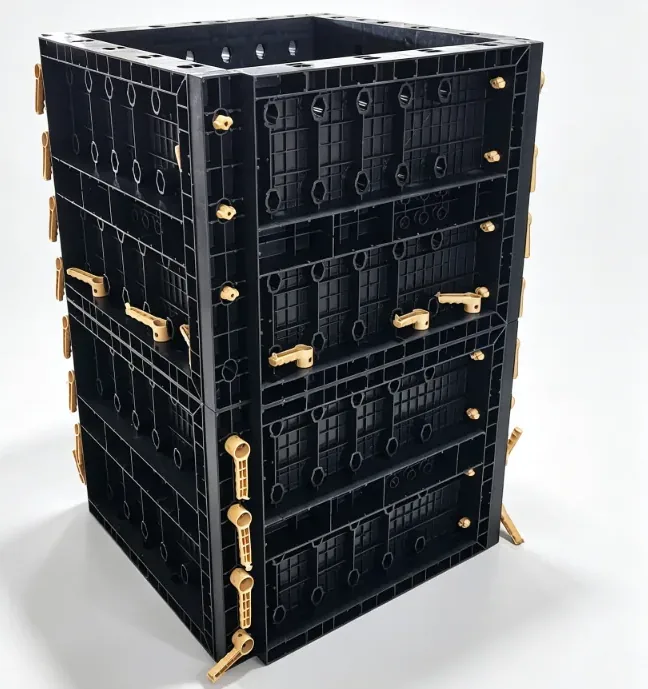
Adjustable Square Column Mould 425 × 600
Reusable PP and ABS plastic column moulds for precasting square and round concrete columns. Square moulds adjust in steps to cast several column widths from a single set; round moulds are fixed-diameter shells. Supplied per set with 600 mm or 750 mm forming height.
Related guide: Adjustable Column Moulds: Sizes, Materials and Casting
An adjustable column mould carries sliding panels inside a fixed frame, so the same tool casts a range of column sizes rather than one. You set the panel position, lock it and pour. On a yard producing more than one column size that replaces a much larger set of fixed moulds, which is the whole argument for the adjustable end of this line.
Four adjustable square moulds cover the range, and each is named by its outside size. The 425 × 600 casts five widths from the five-hole version (150, 200, 250, 300 and 350 mm) or two from the two-hole version (300 and 350 mm). The 675 × 600 casts 200, 300, 400, 500 and 600 mm. The 725 × 600 casts 150, 250, 350, 450, 550 and 650 mm, the widest adjustment range among the moulds with a 600 mm forming height.
Adjustable Square Column Mould 425 × 600 · Adjustable Square Column Mould 675 × 600 · Adjustable Square Column Mould 725 × 600
Forming height is the second number in each model name, and it sets how many lifts it takes to build one column. Three of the adjustable square moulds form 600 mm at a time. The 750 × 730 forms 750 mm, and it is the set that covers the most sizes in this line, casting twelve widths within that height: 50, 100, 150, 200, 250, 300, 350, 400, 450, 500, 550 and 600 mm in 50 mm steps.
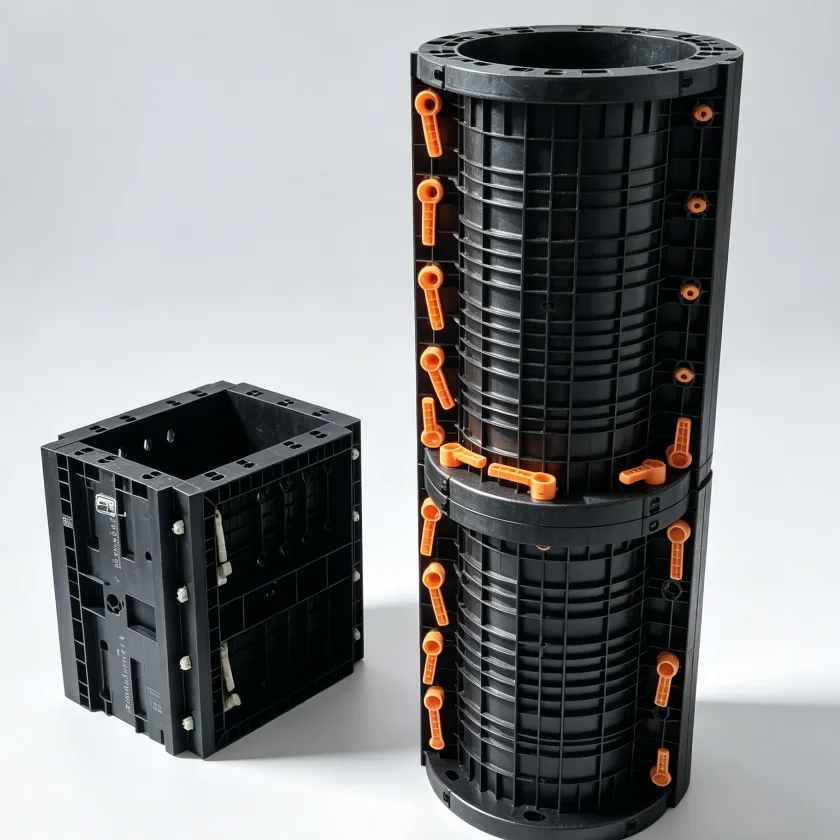
The sets are stackable, so a full-height column is cast in successive lifts rather than needing a taller mould. A 750 mm set means fewer joints to line up and fewer pours to manage; a 600 mm set is smaller to handle and to store. The 750 × 730 is the one to specify for slim decorative columns, balusters, pilasters and feature columns, or for a yard that wants maximum size coverage from minimum stock.
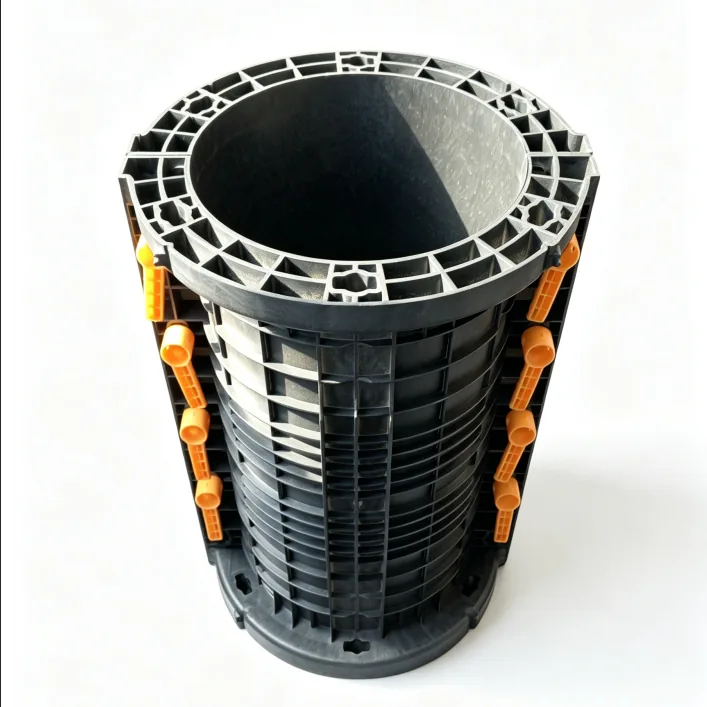
The square moulds in this line are adjustable; the round ones are fixed, and that difference is the most common thing to get wrong when ordering. The round column mould forms a 750 mm height and comes in five fixed diameters — 300, 350, 400, 450 and 500 mm — and each diameter is its own set, ordered separately. Stacking the sets builds a taller column, the same as on the square moulds.
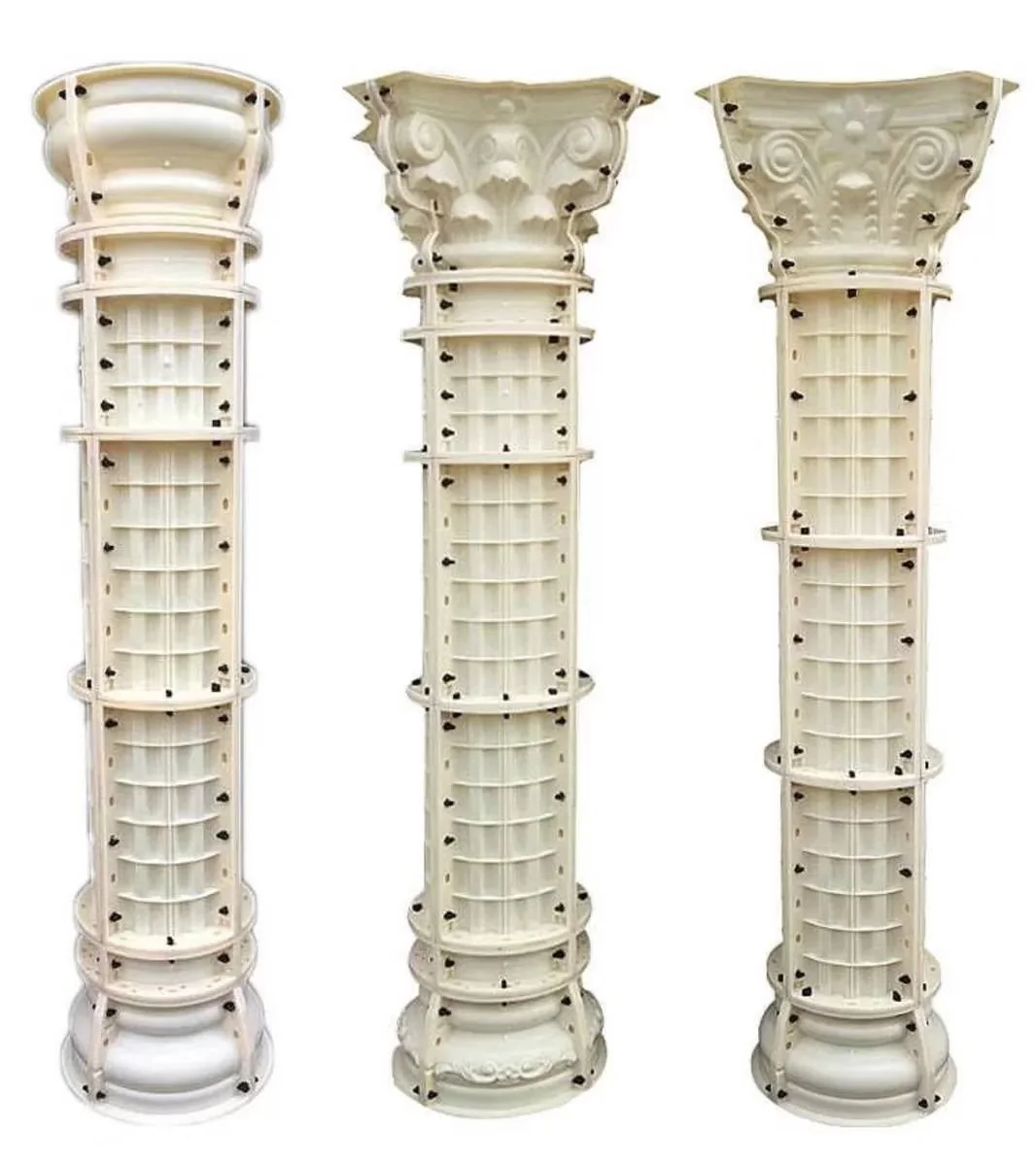
The R-1 differs in profile rather than in principle: it is an ABS mould for round, grooved Roman columns in 300, 350 and 400 mm diameters, for a concrete or marble finish. Mould life is quoted at three years and demoulding takes two to three days. It is a fixed-diameter tool as well, so it is chosen for the classical profile rather than for flexibility.
The moulds are offered in PP, virgin PP and ABS. The choice is not cosmetic: the material sets the surface finish the concrete takes and how the mould behaves after repeated stripping, so it depends on how many casting cycles you expect and on the finish you are selling. Release agent and mix design still matter — a dry mix pulled too early will tear the surface whatever the mould is made of.
Beyond the listed sizes, custom profiles are developed from your drawings or samples. Prices for this line are quoted on request rather than published, because the material and the adjustment version both move the figure.
More questions are answered on the FAQ page.
Sliding panels move inside a fixed frame, so one mould casts a range of column sizes instead of a single fixed dimension. You set the panel position, lock it, and pour. This is why a set of adjustable moulds replaces a much larger set of fixed moulds on a yard that produces more than one column size.
It depends on the mould. The 425 × 600 mm mould with five holes casts 150, 200, 250, 300 and 350 mm columns; the two-hole version casts 300 and 350 mm. The 675 × 600 mm mould covers 200 to 600 mm, the 725 × 600 mm mould covers 150 to 650 mm, and the 750 × 730 mm mould covers 50 to 600 mm in 50 mm steps.
Square moulds cast the rectangular columns used for porches, fences and gate pillars. The round moulds cast columns of 300, 350, 400, 450 and 500 mm diameter at a forming height of 750 mm, which is the classical Roman column profile.
They are produced in our own workshop by injection moulding, and are offered in PP, new PP and ABS. The material choice affects how the surface takes a finish and how the mould behaves after repeated stripping; tell us the surface finish you are selling and we will advise which of the three to specify.
The mould determines the surface, so the panel finish is what the concrete takes. Release agent and mix design still matter — a dry mix pulled too early will tear the surface regardless of the mould. That is a casting technique question as much as a mould question, and it is worth settling before you order a large quantity of one profile.
Tell us the capacity, the power supply you have and the destination port. We will confirm which model in this line fits and quote it with packing dimensions.